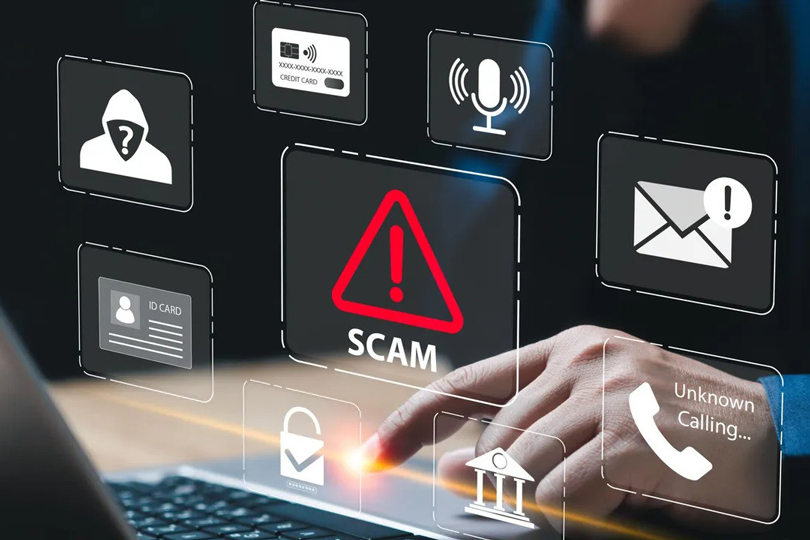
Some fraud attempts begin with a simple message requesting a bank card update, an advertisement offering a quick loan, or a social media page that closely resembles a bank’s official account. What encourages customers to engage with these messages is the familiar name and trusted logo, often before they realize they are dealing with a fraudulent entity attempting to obtain their personal and financial information.
According to a report by the Iraq Fintech Network, data provided by Al-Tafawdh Company revealed that the company detected more than 70,000 fraudulent activities in the Iraqi market during 2025–2026 and handled over 45,000 cases. These figures reflect the company's own operations rather than a comprehensive assessment of fraud across Iraq. The measures taken vary depending on the nature of each case and do not necessarily involve the removal of fraudulent accounts.
These risks are emerging alongside the rapid expansion of digital financial services. According to data from the Iraqi Private Banks League, the value of bank card payments reached IQD 21.2 trillion during the first half of 2026, representing a 45.2% increase compared with the same period of the previous year. This growth highlights the importance of educating customers about authorized financial service channels and helping them distinguish legitimate platforms from impersonating pages and fraudulent links.
Trust in a Familiar Name Can Become a Tool for Fraud
This type of fraud does not necessarily require a breach of a bank’s internal systems. The entire deception process may take place outside the institution’s official website or mobile application. Nevertheless, the bank’s reputation can suffer when customers associate their fraudulent experience with the financial institution whose name was misused.
In this context, the Iraqi Ministry of Interior’s Cybersecurity Directorate warned on August 30, 2026, about fraudulent links impersonating government institutions and service providers to steal personal and banking information. The warning underscores the need to monitor the unauthorized use of institutional names and logos online, alongside efforts to secure internal banking systems.
The report also highlights the work of Al-Tafawdh Company, which specializes in brand protection and digital reputation management in Iraq, particularly its efforts to detect accounts, social media pages, and websites impersonating its clients.
These activities include documenting violations and coordinating with relevant platforms and authorities to pursue the closure of fraudulent accounts or the removal of deceptive content, helping reduce the continued targeting of customers.
Shared Threat Intelligence to Combat Digital Fraud
According to information provided by the company for the report, Al-Tafawdh holds accredited membership in Meta ThreatExchange, a platform that enables participating organizations to exchange intelligence on digital threats, including phishing pages and malicious software.
However, decisions regarding the removal of accounts and content remain subject to the policies and procedures of the respective platforms.
The company operates under the slogan:
“We Share Digital Threat Intelligence and Detect Fraud and Brand Impersonation.”
This approach combines the detection of fraudulent activities with follow-up measures to address violations and notify affected institutions, enabling them to communicate accurate information and clarify misleading claims to their customers.
Reputation Protection Begins with Clear Communication
Brand protection is also closely linked to how financial institutions communicate with their customers. Providing accessible customer support channels, responding to inquiries, and resolving legitimate complaints helps customers reach the appropriate service providers while reducing opportunities for fraudsters to exploit their need for assistance.
For this reason, digital reputation management and the protection of banks and electronic payment companies against impersonation are closely connected to the quality of everyday customer service.
The easier it is for customers to access accurate information through official channels, the faster they can identify fraudulent pages and misleading communications.
Ultimately, trust remains the foundation of the relationship between customers and their banks. Preserving that trust requires continuous monitoring of content published under an institution’s name and timely responses to violations, ensuring that fraudsters cannot exploit established reputations to target customers.
Source: Iraq Fintech Network